
Work Culture in Australia: A Practical Guide for Global Employers
Insights · By Chen ChunJie · Updated 17 October 2026
Australian workplaces are informal, direct and protective of personal time. People use first names with everyone, expect managers to be approachable, and take their leave. For an overseas company building a team in Australia, the culture is easy to work with, but a few habits and a few legal rights shape how you manage day to day.
Last reviewed in October 2026. Cultural points are general tendencies, not rules; legal points are checked against Fair Work Ombudsman sources.
1. Flat hierarchy, first names
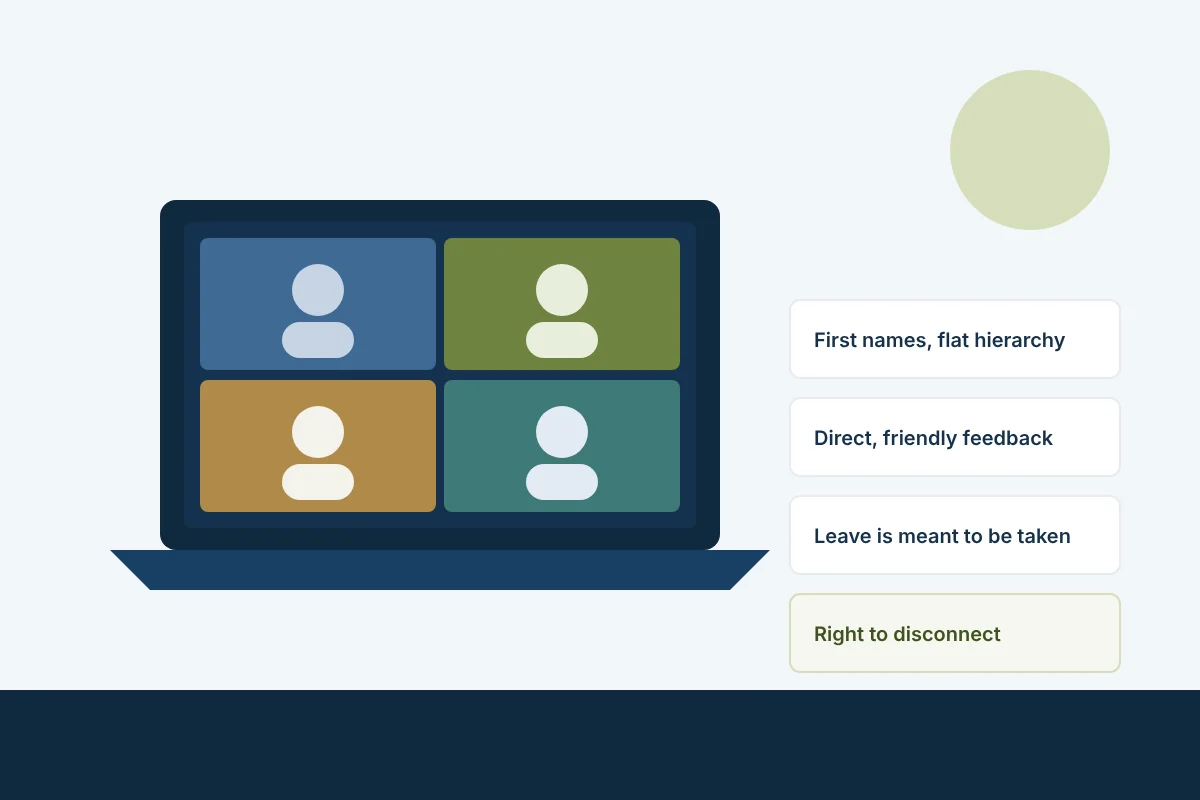
Titles matter less than in many countries. Junior staff speak up in meetings and expect to be asked for their view. Leaders who stay formal or distant can come across as cold. Introduce yourself by first name and make it clear that questions are welcome.
2. Direct, friendly communication
Australians tend to say what they think, often with understatement and humour. Feedback works best when it is plain and specific, delivered privately, and balanced with what is going well. Overstated praise or heavy sales language is easily read as insincere.
3. Working hours and the right to disconnect
The standard full-time week is 38 hours, and long hours are not seen as a badge of honour. Since 26 August 2025 all employers, including small businesses, are covered by the right to disconnect: an employee can refuse to monitor, read or respond to contact outside their working hours unless the refusal is unreasonable. Fair Work
For a team spread across time zones, agree core hours, put urgent-contact rules in writing and schedule recurring meetings inside the Australian working day. Sydney is UTC+10 (UTC+11 in daylight saving, October to April) and Perth is UTC+8.
4. Leave is meant to be taken
Full-time employees get four weeks’ paid annual leave a year, and most take it, often in a block over Christmas and January, which is summer. Many businesses slow down or close between Christmas and New Year. Plan launches and deadlines around this and around the state’s public holidays. 2026 public holidays
5. Work-life balance and flexible work
Hybrid and flexible arrangements are common. After 12 months’ service, many employees have a legal right to request flexible working, and the employer must reply in writing within 21 days, with reasons if it refuses. Treat requests as a conversation rather than a formality.
6. Diversity and fair treatment
Australia’s workforce is highly multicultural, and discrimination and bullying are taken seriously, both legally and socially. Clear policies, fair processes and consistent treatment build trust quickly.
7. Safety includes mental health
Work health and safety laws cover psychological as well as physical risks, including excessive workloads, poor support and bullying. These duties apply to home-based employees too, so a simple home-office check and an easy way to raise concerns are good practice.
8. Pay transparency and fairness
Employees can discuss their pay if they choose, and pay secrecy clauses in new contracts are not enforceable. Expect questions about how pay is set, and be ready to explain it.
Your first 30 days with an Australian hire
- Agree core hours and how urgent contact outside them works
- Book a weekly one-to-one inside the Australian working day
- Share the state's public holidays and your team's leave plans
- Explain goals and how feedback will be given
- Confirm the home-office set-up and who to call about problems
- Introduce the person to colleagues in other time zones
Building your first Australian team without an entity?
Many overseas companies start with one or two people employed through an employer of record in Australia, which handles the contract, payroll, super and local compliance while you manage the work. For the legal side of employing in Australia, see our Australia employment law guide and how to hire employees in Australia.
Questions about Australian work culture
What is work culture like in Australia?
Informal, direct and egalitarian, with a strong focus on work-life balance. People use first names, speak openly with managers and take their annual leave.
How many hours do Australians work?
The standard full-time week is 38 hours, plus reasonable additional hours. Overtime rules depend on the award or contract.
Can I contact my Australian employee after hours?
You can, but they can refuse to monitor or respond outside working hours unless refusing is unreasonable, under the right to disconnect. Agree urgent-contact rules in advance.
When do Australians take holidays?
Many take leave over Christmas and January, the summer holidays. Each state also has its own public holidays.
Hiring in Australia from overseas?
NNRoad employs your chosen person through our licensed Australian employing partner, so you can build the team before setting up a company.